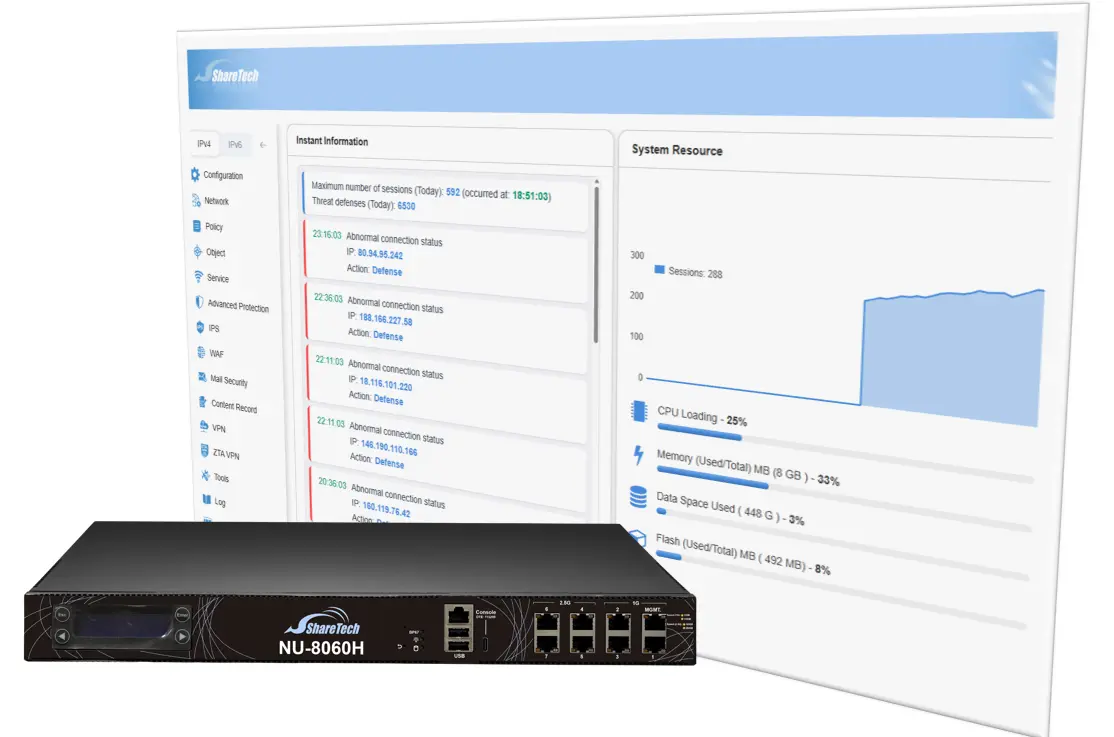
ShareTech Next Generation UTM (NG UTM)
ผสมผสานความสามารถของ Firewall ยุคใหม่เข้ากับการปกป้องความปลอดภัยที่ขับเคลื่อนด้วย AI มอบการควบคุมแอปพลิเคชันแบบ DPI, In-Line IPS, การตรวจสอบ SSL/TLS, การคัดกรองเว็บ, แอนตี้ไวรัส, แอนตี้สแปม, WAF และ MFA เพื่อป้องกันภัยคุกคามทางไซเบอร์และการเข้าถึงที่ไม่ได้รับอนุญาตได้อย่างมีประสิทธิภาพ
การป้องกันอัจฉริยะด้วย AI
ด้วย AI IPS และ AI Sandstorm ทำให้ NG UTM เพิ่มประสิทธิภาพในการตรวจจับภัยคุกคามที่ไม่รู้จัก พฤติกรรมที่ผิดปกติ และมัลแวร์ขั้นสูง ช่วยให้การป้องกันความปลอดภัยมีความชาญฉลาดและเชิงรุกมากยิ่งขึ้น
รองรับระบบสำรองข้อมูลแบบ HA Redundancy เพื่อการบริการที่ต่อเนื่องไม่หยุดชะงัก พร้อมทั้งรวมการบริหารจัดการแบบศูนย์รวมสำหรับสวิตช์และ Wireless AP เมื่อทำงานร่วมกับแพลตฟอร์ม ShareTech Cloud ผู้ดูแลระบบจะสามารถตรวจสอบสถานะเครือข่ายและอุปกรณ์ได้แบบเรียลไทม์ผ่านอินเทอร์เฟซเดียว
High Performance × Reliable Protection
สถาปัตยกรรมฮาร์ดแวร์ที่ได้รับการปรับแต่งมาอย่างดี ช่วยให้มั่นใจได้ถึงการปกป้องความปลอดภัยที่แข็งแกร่ง โดยไม่ลดทอนประสิทธิภาพของเครือข่าย มอบการป้องกันที่เชื่อถือได้สำหรับการดำเนินธุรกิจในทุกๆ วัน
All-in-One Security Platform
แพลตฟอร์มเดียวที่รวบรวม Firewall, การป้องกันการบุกรุก, การควบคุมแอปพลิเคชัน, การตรวจจับภัยคุกคาม, VPN และการบริหารจัดการแบบศูนย์รวม เพื่อการปกป้องเครือข่ายที่ครอบคลุม
Visibility × Intelligent Control
แดชบอร์ดแบบเรียลไทม์และการวิเคราะห์ปริมาณข้อมูล (Traffic Analytics) ช่วยให้มองเห็นผู้ใช้งาน, แอปพลิเคชัน, การใช้แบนด์วิดท์ และเหตุการณ์ด้านความปลอดภัยได้อย่างชัดเจน
Unified Network Management
จัดการ Firewall, สวิตช์ และเครือข่ายไร้สายผ่านแพลตฟอร์มคลาวด์และ On-premises ที่เป็นหนึ่งเดียว เพื่อการตรวจสอบและแก้ไขปัญหาที่รวดเร็วยิ่งขึ้น